
Choosing the best 3PL software takes more than comparing feature lists. The system has to fit into everyday order processing, client communication, billing, delivery tracking, returns, and integrations. If it does not fit those workflows well, teams may end up creating manual workarounds around software they are already paying for.
This matters even more as clients expect better visibility, faster information, and stronger technology support from their 3PL partners. The 2026 Annual Third-Party Logistics Study identifies technology as a key differentiator while also noting a persistent gap between shipper expectations and 3PL technology capabilities.
Quick Answer: What Should You Look for in the Best 3PL Software?
The right system should handle the workflows where mistakes or delays cost you the most. It also needs to work with the systems your clients and partners already use, while supporting billing and operational visibility as volumes and client requirements change.
Compare vendors using actual scenarios from your operation. Along with the demo, review integrations, security, total cost, customer references, and what the implementation will involve. A long feature list alone does not tell you how well the software will work in practice.
Map Your Workflows Before Comparing the Best 3PL Software Vendors
Before requesting demos, document how work actually moves through your operation. If you need a foundation first, review what 3PL logistics software is and how it works.
For each major workflow, record the trigger, data source, responsible team, client-specific rule, exception path, required document, billing event, and final status. A basic map might cover:
Order received → validation → warehouse/inbound or outbound activity → dispatch → tracking → delivery confirmation → billing → return or close-out
Test both routine orders and the situations that usually create extra work. A system may handle a standard order well but become difficult when you deal with failed deliveries, reconsignment, split orders, client-specific billing, or returns. If those cases still need manual intervention, the software has not really removed the problem.
If spreadsheets are still central to these handoffs, the warning signs in signs your 3PL management process has outgrown spreadsheets can help identify which processes deserve priority in your requirements list.
Which Key Features of 3PL Services Software Should You Check Before Choosing the Best 3PL Software?
Do not judge a system only by the feature names on its website. Ask the vendor to show how those features would work with your clients, rules, order types, and exceptions.
- Multi-client rules: Can different clients have separate SLAs, rate cards, labels, reports, permissions, and workflows without creating fragile manual workarounds?
- Order intake and integration: Can the system receive orders through the formats you actually use – API, EDI, files, portals, or connected business systems – and show failed or duplicate transactions clearly?
- Billing: Can operational events feed the correct contract rules, accessorials, receivables, or payables? Billing problems often begin when operational activity and finance records are disconnected. See how manual billing can create 3PL revenue leakage.
- Tracking and exceptions: Can teams see the current state of an order, who last handled it, what exception occurred, and what action is pending?
- Returns and reconsignment: Test non-standard delivery outcomes instead of assuming “returns management” covers your process.
- Reporting and auditability: Check whether teams can trace status changes, user actions, timestamps, documents, and client-specific reporting without manual reconstruction.
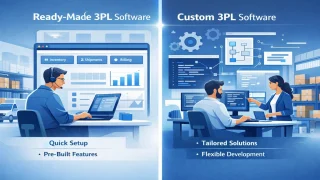
- Configuration versus customization: Ask which changes your administrators can make themselves and which require vendor development. If major workflows need modification, review custom 3PL software solutions vs ready-made systems before deciding how much customization is acceptable.
If final-mile delivery confirmation is within scope, assess proof of delivery software capabilities separately. Check what evidence the system can capture and how it records timestamps and recipient details. Also test how teams handle failed deliveries, whether users can work offline where needed, and how proof feeds customer service or billing.
GS1’s EPCIS visibility standard looks at what happened, when and where it happened, why it happened, and the business context around the event. This gives you a useful way to check whether the software records important handoffs rather than showing only the latest status.
Check Integrations, Data, and Security Before Choosing the Best 3PL Software
When comparing the best 3PL software vendors, do not let a good-looking interface distract you from integration problems. If data does not move reliably between systems, the software can still create operational issues. Ask vendors to show API documentation, authentication methods, error handling, retry logic, monitoring, rate limits, versioning, and a real integration flow. Also confirm who owns operational data, how you can export it, and what happens to data when the contract ends.
Security should be reviewed while you are comparing vendors, not after the software has already been selected. NIST’s Cybersecurity Framework 2.0 supply-chain risk guidance recommends due diligence before entering supplier relationships and evaluating the technology and cybersecurity capabilities of prospective suppliers.
At minimum, review access controls, MFA support, encryption, backups, recovery objectives, incident response, vulnerability management, audit logs, subprocessors, and contractual responsibilities. Requirements should match the sensitivity and criticality of your operation.
Test the Best 3PL Software Vendors Against Your Real Workflows
Do not rely only on the scenarios a vendor chooses to demonstrate. Give every shortlisted vendor the same three or four situations from your operation and compare how each system handles them.
For example, ask them to process a priority client order received through your normal intake method. Then ask them to show a delivery exception, a return or reconsignment path, and how chargeable activity reaches billing.
Check whether the task gets completed, but also look at the work needed to get there. Count the manual steps, exports, repeated data entry, administrator changes, and vendor support required.
A vendor may say a workflow is “supported,” but if your team still has to step in repeatedly, it may not be a good fit for day-to-day operations.
Compare 3PL Software Pricing Before Choosing the Best 3PL Software
A low subscription price can be misleading if integrations, implementation, customization, support, or scaling costs sit outside the headline figure. Therefore, compare the same cost categories across vendors.
|
Cost area |
What to ask |
| License/subscription | Is pricing per user, order, client, site, module, transaction, or tier? |
| Implementation | What is included in discovery, configuration, migration, testing, and training? |
| Integrations | Are standard and custom API/EDI connections charged separately? |
| Customization | What requires paid development, and how are upgrades affected? |
| Support | What SLA is included, and what costs extra? |
| Scale and exit | What changes at higher volumes, more sites, or contract termination? |
When comparing 3PL software pricing, look beyond the first-year quote. Estimate what each option could cost over the next few years as order volumes, users, clients, sites, and integrations increase.
Use a Clear Process to Choose the Best 3PL Software
A practical sequence is:
Requirements map → weighted scorecard → shortlist → scripted demo → integration/security review → total-cost comparison → reference checks → implementation plan → contract review
Give higher priority to requirements that directly affect revenue, customer commitments, operational risk, or processes where your team currently spends a lot of manual effort.
Do not give dashboard features more importance than the workflows that actually determine whether orders, deliveries, returns, and invoices are processed correctly.
Red Flags to Check Before Choosing the Best 3PL Software Vendor
Be cautious when API details are vague, pricing excludes essential connectors, or data export is unclear. Other red flags include repeated “we can customize that” responses and an inability to provide relevant customer references.
Another warning sign is an implementation proposal with no clear responsibilities for data cleanup, testing, training, or adoption.
The results you get from the software will also depend on your existing workflows, data quality, integrations, implementation effort, team adoption, and the size of the operation. A software vendor cannot solve problems in all of these areas on its own.
Where iLogistech May Fit in Your 3PL Software Vendor Evaluation
Mechsoft’s published iLogistech 3PL logistics software scope includes order processing, inbound and outbound workflows, tracking, and delivery-agent activities. It also covers documentation, receivables/payables, returns and reconsignment, and API integrations.
If those areas match your requirements, evaluate iLogistech with the same scorecard and scripted scenarios used for other shortlisted vendors. Do not assume that a “3PL software” label automatically means a full WMS, TMS, or every specialized warehouse or transport capability; verify the exact functions your operation needs.
If iLogistech reaches your shortlist, request a demonstration around your own order-to-delivery, billing, integration, and exception scenarios rather than relying on a generic product tour.
Conclusion
The best 3PL software vendor for your business is the one that can show how its system will handle your actual workflows, integrations, client rules, billing requirements, delivery records, security needs, implementation constraints, and future growth.
Before signing a contract, ask the vendor to demonstrate difficult scenarios, clarify what is standard and what requires customization, explain the full cost, and define who will be responsible for implementation. This gives you a much clearer picture of whether the system will actually work for your operation.
FAQs
Q. What Is the Best 3PL Software for a Growing Logistics Company?
A. There is no universal winner. The best fit depends on client complexity, order volume, integrations, billing rules, warehouse and delivery workflows, reporting needs, internal IT capacity, and growth plans. Build requirements first, then compare vendors against the same scenarios.
Q. Does the Best 3PL Software Need Proof of Delivery Software?
A. It should capture the delivery evidence your operation genuinely needs, such as time, recipient details, status, exceptions, and applicable supporting records, while preserving a clear audit trail. Requirements vary by service model, customer contract, geography, and compliance needs.
Q. How Should I Compare 3PL Software Pricing When Choosing the Best 3PL Software?
A. Compare total cost of ownership: subscription or license, implementation, migration, integrations, customization, training, support, scaling, upgrades, and exit or data-export costs. Use the same volume and growth assumptions for every vendor.
Q. How Long Does 3PL Software Implementation Take?
A. There is no reliable universal timeframe. Duration depends on the number of sites, integrations, data quality, workflow complexity, customization, testing, and user training. Ask each vendor for a work breakdown, dependencies, acceptance criteria, and named owners before committing.