
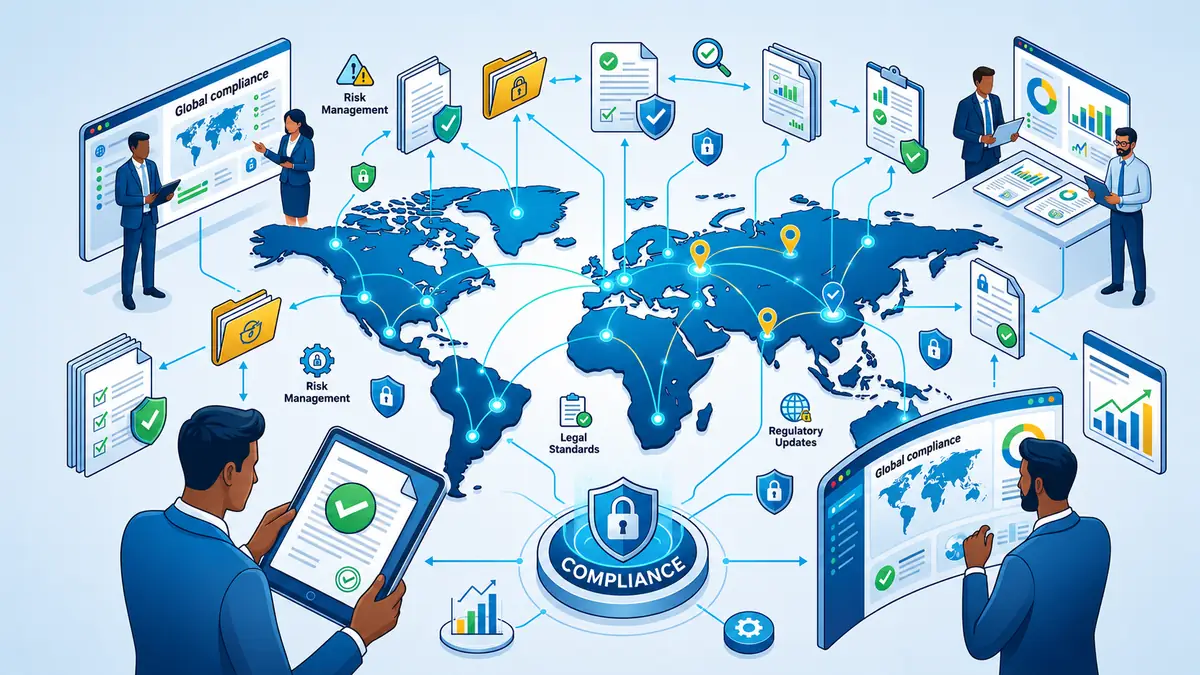
These days, if you want to stay ahead, global hiring isn’t really a choice, it’s a must. But the moment you go international, everything gets a lot more complicated. Suddenly, you’re dealing with different government rules, tracking dozens of visas, and juggling documents in several languages and formats. Without a proper Compliance Document Management System, it’s easy to underestimate just how messy it can get.
People want global opportunities now more than ever. PwC’s Global Workforce Hopes and Fears Survey backs this up, the report that employees are ready to move across borders, and companies have to keep up if they want the best talent. That means managing international hires better, and that’s where a visa management system stops being a “nice-to-have” and becomes essential.
Let’s talk about what a visa management system actually does, why it matters to global companies, and how smart businesses are using these tools to prevent expensive compliance mistakes and grow without the constant fear of missing something important.
So, what’s a visa management system, anyway?
Think of it as your digital command center for everything visa-related. Instead of connecting things together with Excel sheets, scattered emails, and endless reminders, you get one platform that takes care of it all:
- Handles visa applications (whether it’s a new visa, a renewal, or cancellation)
- Tracks important documents like passports, labor cards, medical reports, you name it
- Manages compliance workflows so you stay in line with local laws
- Gives you real-time updates on visa status
- Sends alerts before anything expires or needs attention
Basically, it replaces all that manual, error-prone busywork with one automated, organized system. That means fewer mistakes, less stress, and a lot more confidence as you grow worldwide.
Why Global Employers Can’t Ignore Compliance Document Management System
This Let’s be honest! If you’re managing international employees without a real system, you’re just hoping nothing goes wrong. But sooner or later, it will.
Here’s what you’re up against:
- Manual Methods Just Can’t Keep Up:- Plenty of companies are stuck using Excel lists, endless emails, or someone’s memory to keep track of everything. That’s fine if you’ve got a handful of people abroad. But when that number grows 50, 100, 500 and suddenly you’re buried.
- Compliance Keeps Getting Trickier:- Every country wants something different like visa rules, paperwork, deadlines, you name it. And the rules always seem to change.
- No Visibility Means Bad Decisions:- Leaders need answers, but with scattered info, all you get is “I’ll check and get back to you.” How many visas are still in process? What’s each one costing you? Where are the bottlenecks? When your tracking and reporting tools are a mess, nobody really knows what’s going on, so decisions come down to guesswork.
And here’s the kicker: Fragomen’s 2025 report shows governments are cracking down everywhere. Penalties for noncompliance? Up 200% in the UK, 300% in Luxembourg, 400% in Taiwan. Plus, with AI tools getting more advanced, global businesses are facing rising compliance costs and constant monitoring. So, if you’re thinking you can “wing it,” think again. The risks just keep growing.
Key Challenges in Visa and Compliance Management
Most organizations face:
- Endless visa tracking across multiple stakeholders
- Poor accountability between HR, PROs, and vendors
- Communication gaps with employees
- Missed deadlines leading to financial penalties
- Difficulty managing government compliance across regions
- Fragmented compliance document management
These aren’t minor inefficiencies; they directly impact cost, compliance, and employee experience.
How a Visa Management System Solves These Problems
A modern system is not just a tracker; it’s a compliance document management engine.
Here’s how it changes the game:
1. Centralized Compliance Document Management
All documents like passports, visas, labor cards—are kept in one system.
Benefits:
- No lost documents
- Easy document retrieval during audits
- Total visibility for the entire team
2. Real-Time Visa Tracking
No more running around for information:
- Track the application in real-time
- Know the exact status (submitted, approved, pending)
- Reduce the number of employees asking for information
3. Automated Workflows
No more depending on memory and follow-ups:
- Automated task assignment
- Country-specific rules are followed
- Every step is completed
4. Alerts and Notifications
One of the biggest risks is missed deadlines.
A good system:
- Proactively sends notifications for expiring documents
- Notifies stakeholders for each step
- Prevents costly delays
5. Reporting and Insights
Modern systems offer:
- Processing timelines
- Cost analysis
- Bottleneck identification
This allows leadership to make informed decisions instead of reacting late.
This is where a robust solution, like Mechsoft’s visa management solution, can help organizations achieve these benefits. Ladders Visa, for example, is designed specifically for the complex process of expat visas. With features like dynamic workflows for different countries, compliance document management, real-time tracking, and alerts, organizations can process thousands of visas, saving significant operational time and avoiding costly compliance issues.
In fact, organizations that use a structured approach, as in the case of a visa management system, have reportedly processed thousands of visas, saving significant operational time and avoiding costly compliance issues.
A real world example
A prominent business conglomerate in the Gulf, with business interests in retail, entertainment, and real estate, was looking to address the complexities of managing government documentation for its multinational workforce. The company has 75% of its employees as expatriates, and hence, required a solution that could cater to their needs on a single platform. Ladders Visa has developed a highly sophisticated visa management solution enabled by Artificial Intelligence.
The Role of Compliance Document Management in Visa Systems
This, in fact, is where most organizations are likely to get it wrong.
A robust visa management system, in fact, can be as good as its compliance document management capabilities. If a visa management system lacks compliance document management capabilities, organizations can expect a series of issues, including:
- Increased likelihood of application rejections
- Increased likelihood of errors
- Increased likelihood of compliance failures
- Secure storage
- Audit logs
- Document validation
- Version control
According to some reports the accuracy of compliance increases by up to 30% in companies that have implemented structured document management systems.
Features That Define an Effective Visa Management System
Not all systems are equal. The difference lies in execution.
Look for:
Dynamic Workflows
Adapt your processes according to the requirements of different countries.
Multi-Country Support
Process different regulations, languages, and currencies.
Configurable Templates
Make changes to rules and documents without IT dependency.
SLA Management
Track and manage deadlines.
Secure Document Storage
Store all your documents in one place.
Activity Logs
Have complete audit trails for everything.
The Hidden Cost of Not Having a System
Without a visa management system, you’re looking at:
- Rework due to errors
- Fines
- Dissatisfied employees
- Inefficient operations
And most importantly, the loss of the ability to scale your business.
Where are Smart Organizations moving
Forward-thinking companies are moving from:
- Manual tracking → Automated workflows
- Fragmented systems → Unified platforms
- Reactive compliance → Proactive management
They are moving towards systems that integrate:
- Visa processing
- Compliance document management
- Real-time tracking
- Reporting
Why? Because the goal is not just to manage visas, it’s to build a scalable compliance ecosystem.
A Smarter Approach to Visa Management
Modern solutions already exist in the market today to address the aforementioned challenges by providing an automated approach to visa management through a single window.
These solutions provide the following benefits:
- Automate end-to-end visa workflows
- Provide real-time dashboards and alerts
- Integrate with existing HR systems
- Reduce manual workloads by a significant margin
Organizations using these solutions have benefited from:
- Significant time savings
- Reduced compliance risks
- Improved transparency
The shift from chaos to control is now a reality.
Final Thoughts
A visa management system is no longer a ‘nice-to-have’ but a ‘need-to-have’ for any organization with a global presence. If your current approach to visa management involves a spreadsheet-based system, emails, and manual tracking, you’re exposing your business to unnecessary risks. The question is no longer whether you need a system; the question is for how long you can afford to operate without one.